Changing Tobacco Customer Preferences
Tobacco customers' preferences are changing with more and more of them preferring smokeless products. These preferences have driven the manufacturers as well as the retailers strategies when it comes to tobacco products and participation in the scandata programs.
The nicotine pouch category has undergone significant growth in the United States, creating new considerations for convenience store owners, gas station operators, and tobacco retailers. ZYN, a nicotine pouch brand owned by Philip Morris International (PMI) through Swedish Match, has played a major role in that expansion.
For retailers, however, the story is about more than category growth. As product selections, promotional programs, and reporting requirements evolve, having accurate point-of-sale (POS) data becomes increasingly important. Retailers have to look at the numbers nationally as well the numbers within their local market and should understand about managing this changing category. One of the important aspects is to whether to participate in the PMI scandata program or not.
The rise of nicotine pouches
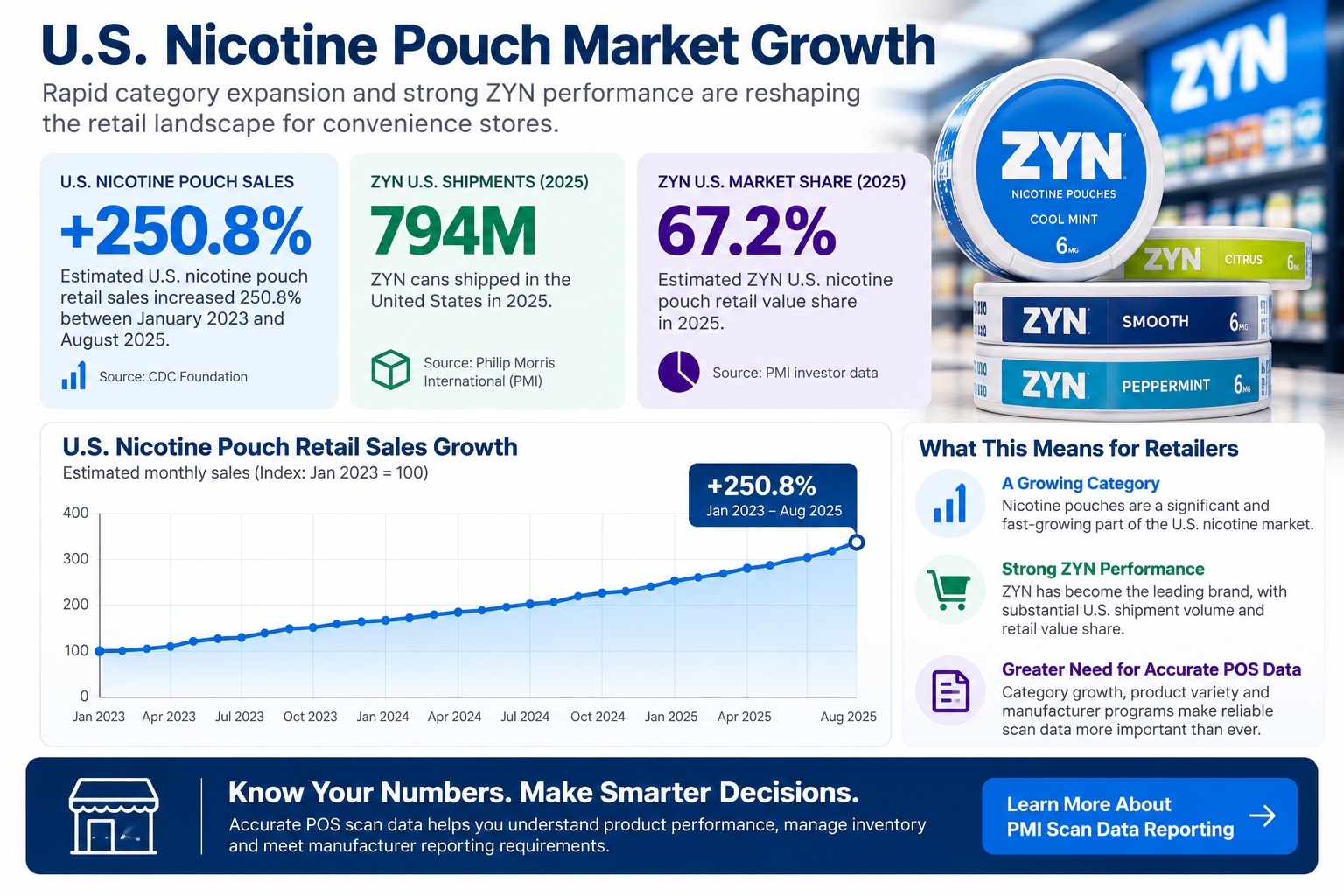
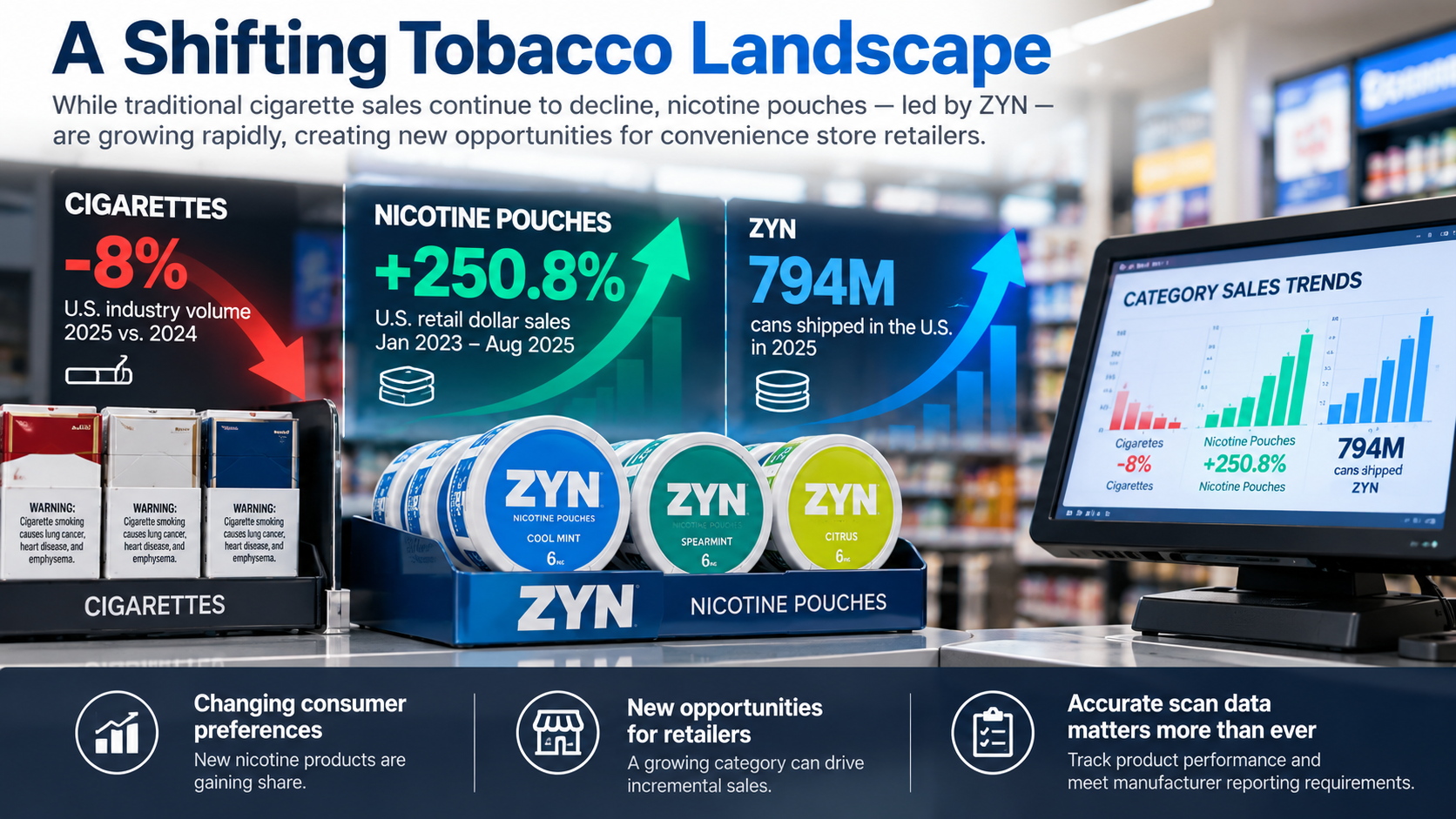
More tobacco consumers are preferring nicotine pouches and these have become a significant part of the broader U.S. nicotine products market. According to the CDC Foundation, estimated U.S. nicotine pouch retail sales increased 250.8% between January 2023 and August 2025.
That growth reflects a major shift in the retail category over a relatively short period. The figures also highlight why retailers need to pay attention to product-level sales trends rather than relying only on overall tobacco department performance. A store may see growth in one product category while experiencing different trends across traditional tobacco products or competing nicotine pouch brands.
For convenience store operators, the practical question is not simply whether the category is growing nationally. It's how the category is performing in their own stores.
ZYN's Growth: Primary catalyst
Within the nicotine pouch category, Zyn is the undisputed leader and in one way the rapid growth of the nicotine pouch market can be attributed to Zyn's growth. PMI reported 794 million ZYN cans shipped in the U.S. during 2025, with the brand accounting for approximately two-thirds of the nicotine pouch category's retail value that year. That represents substantial scale for a product category that has expanded rapidly in recent years.
But national growth does not guarantee identical results at every retail location. Sales can differ based on local demand, permitted product assortments, pricing, competition, and applicable state or local regulations. It's also important to distinguish between manufacturer shipments and actual retail sales. Shipment figures measure products moving through distribution channels, while POS scan data records transactions at the store level.
For a retailer evaluating product performance, that distinction matters. But it should also make the case for most retailers participating in the PMI scandata program. Recent FDA decisions regarding Zyn which allowed PMI to start promoting this brand more aggressively has contributed to Zyn's growth.
FDA Decisions & Impact
Regulatory developments are another important part of the nicotine pouch market story.
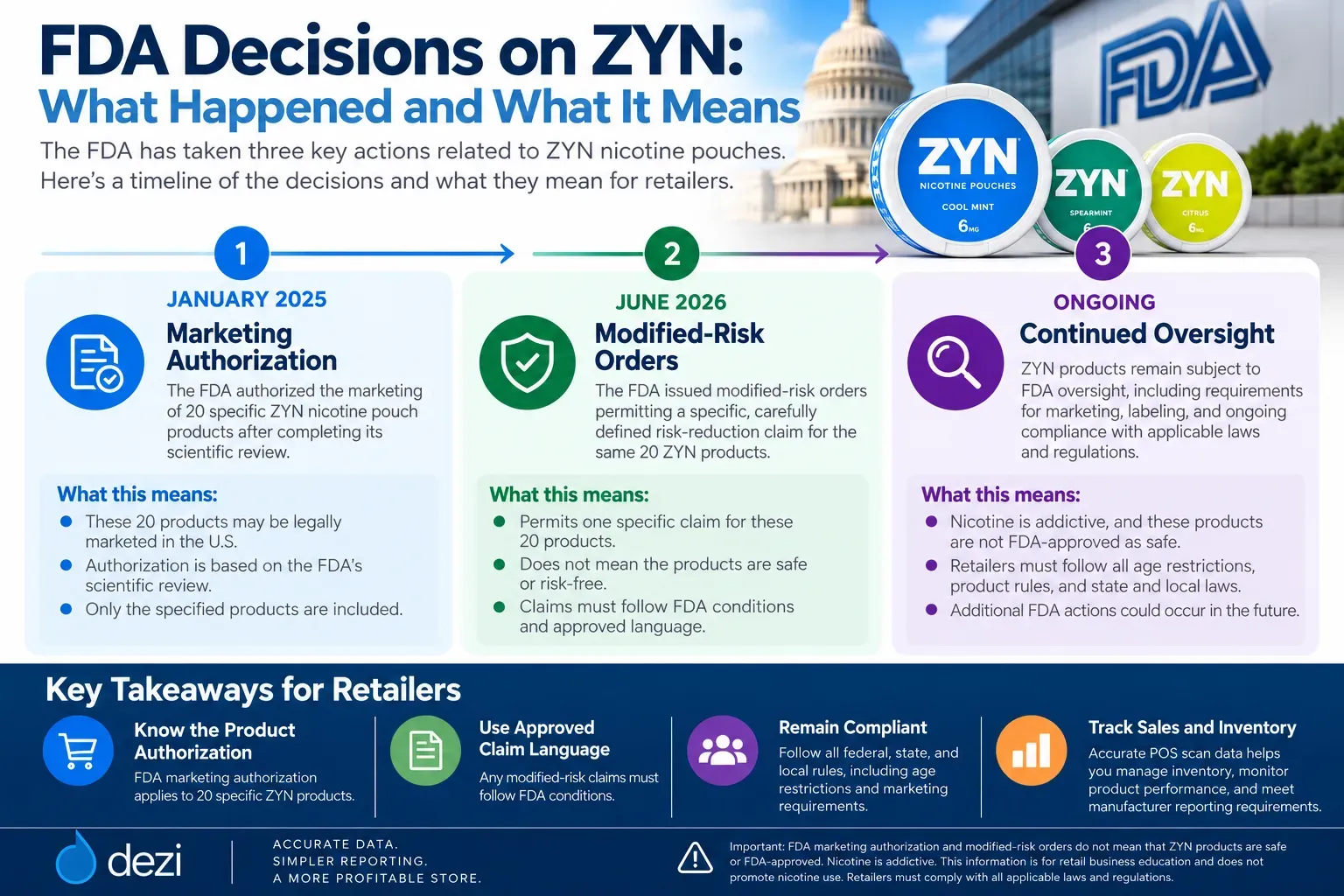
- In January 2025, the U.S. Food and Drug Administration authorized the marketing of 20 ZYN nicotine pouch products following its scientific review.
- In June 2026, the FDA issued modified-risk orders permitting a specific, carefully defined risk-reduction claim for those 20 products.
We have seen Zyn ads popping up in public places due to these changes in the FDA regulations
Why should Retailers care about Zyn's Growth?
Retailers are aware that the tobacco industry is facing some touch choices - lowering sales, shifting customer preferences as well as more government regulations. But one silver line here is the expansion of the nicotine pouch category sales. Category expansion creates opportunities to improve retail operations, but it can also add complexity.
Consider three practical areas.
- Understanding Which Products Actually Sell: A growing category may include different brands, varieties, package formats, and nicotine strengths. Without product-level POS reporting, retailers may struggle to distinguish consistent sellers from slower-moving inventory. Accurate scan data can help store operators review sales by SKU, compare performance across locations, and make better-informed replenishment decisions.
- Managing Promotional Activity: PMI supported promotional programs may include buydown discounts, multipack offers, or loyalty-based promotions, depending on eligibility and program terms. These offers can introduce additional transaction-level reporting requirements. Retailers need to understand which products and transactions qualify and whether their POS systems can capture the information required by a particular program.
- Maintaining Reliable Reporting: As manufacturer programs become more data-driven, accurate and timely reporting can be an important operational responsibility. Missing product identifiers, incorrect transaction details, or inconsistent reporting may create unnecessary administrative work. Having a dependable reporting process helps retailers maintain clearer records and address potential data issues sooner.
Why PMI Scandata?
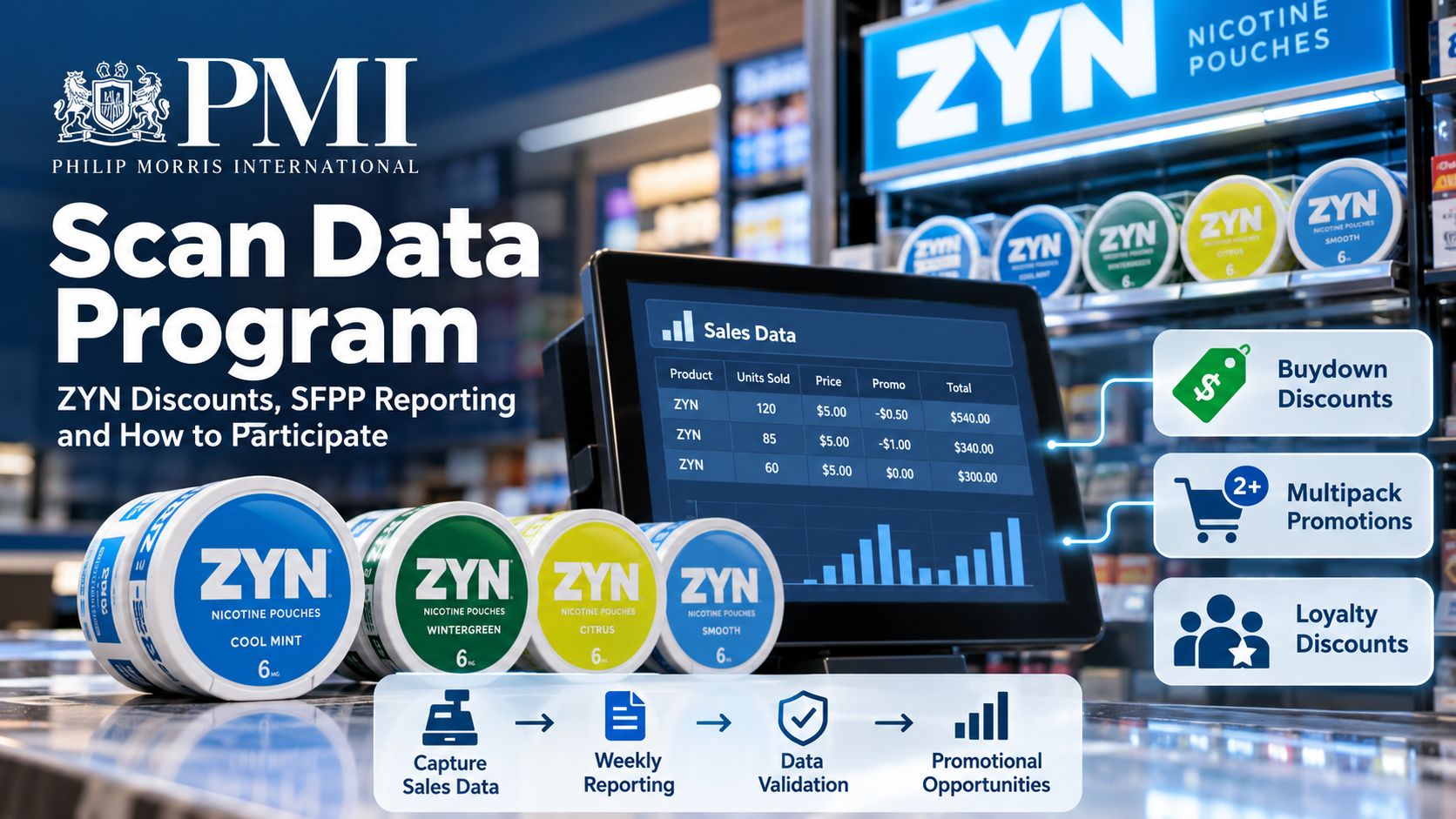
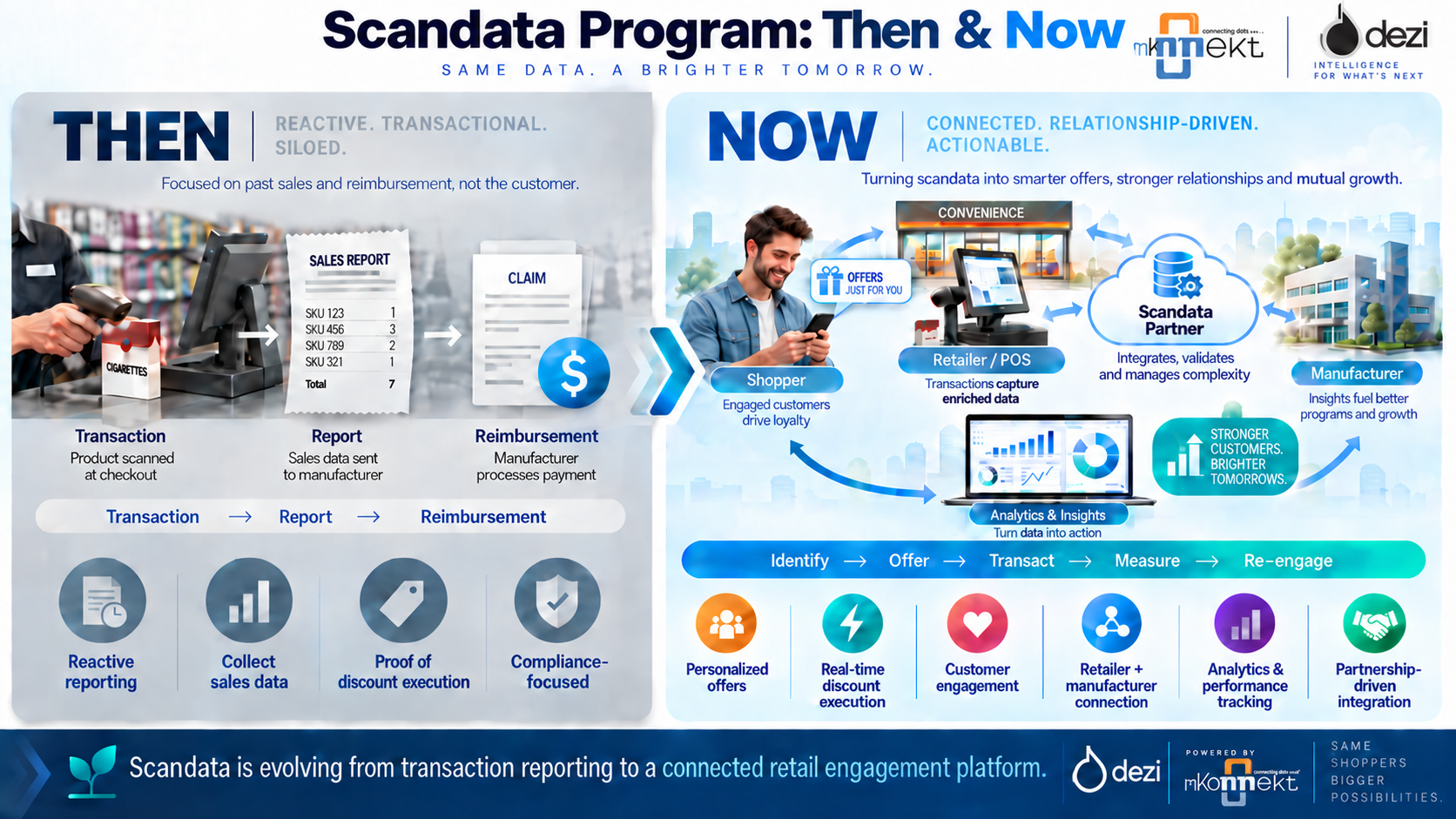
In one of our articles recently we have posted how scandata has evolved and scandata by retailers is considered as a growth tool. Within the nicotine pouch market, Zyn has the largest market share and retailers should take advantage of this growth by offering discounts on eligible products to their customers. With scandata reporting, retailers would be able to identify trends and keep an eye on product sales.
For convenience store operators, accurate scan data can serve two purposes:
- Better business visibility. Retailers can understand how specific products and categories are performing rather than relying entirely on broad sales totals.
- PMI program reporting. Participating retailers may need to provide qualifying sales information in a prescribed format and schedule to meet program requirements.
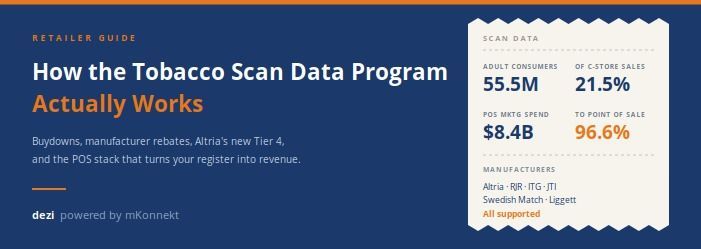
The second point is especially relevant to PMI's existing scan data reporting program. Retailers exploring PMI-related reporting requirements can read our companion guide: PMI Scan Data Program: SFPP Reporting, ZYN Discounts, and Retailer Guide. This article explains the program at a practical level, including promotional categories, reporting considerations, and retailer participation.
How dezi Is Helping Retailers Prepare
As nicotine pouch retailing evolves, store operators need technology that supports accurate transaction records and efficient reporting.
dezi, powered by mKonnekt, is supporting PMI's existing Scandata Program, building on its focus on retail POS and scan data reporting solutions. For retailers, the first step is understanding their current POS capabilities, program eligibility, and reporting needs. Rather than navigating those questions alone, retailers can
contact the dezi team to discuss their situation and available options.
Disclaimer: Market statistics reflect the cited reporting periods and sources. PMI promotional programs, eligibility, reporting obligations, and product availability are subject to applicable terms and laws. This article is intended for retail business education and does not promote nicotine use.